
IBM 5100 Portable PC
$20,000 - 1975
$20,000 - 1975
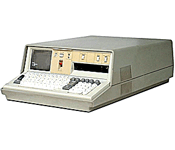
A very early system, and weighing only 55-
IMSAI 8080
$930 - 1975
$930 - 1975
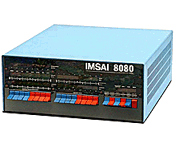
The '8080' was one of the best-
Zenith eazy PC
$1,200 - 1987
$1,200 - 1987
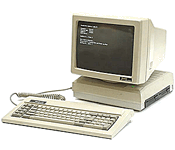
An attractive but unusual home computer - very limited with no internal expansion capabilites.
Commodore B128-80
$,1700 - 1982
$,1700 - 1982
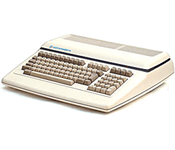
This could be one of the most physically attractive computers ever - it has a very nice shape and sexy curves.
But it takes more than good looks - the line was unpopular and was discontinued within one year.
Radio Shack TRS-80 MC-10
$120 - 1983
$120 - 1983
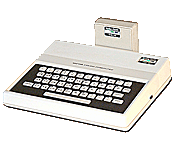
Super cheap, barely useful computers were sold by the millions in the early 80's.
This is one of the best, but people tired of them quickly and the trend faded away.
Bell & Howell
1979
1979
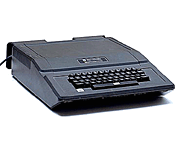
Really just an 'Apple II Plus' computer painted black.
But there was no foul play - the systems were legally licensed from Apple Computers for use in school classrooms and educational institutes.
Epson HX-20
$800 - 1982
$800 - 1982
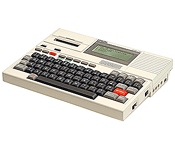
With a 20x4 character display, built-
Lobo Systems MAX-80
$820 - 1980
$820 - 1980
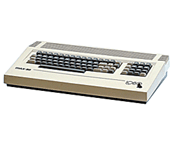
Roger Billings named his company after his pet wolf, Lobo.
They started-
Tomy Tutor
$380 - 1983
$380 - 1983
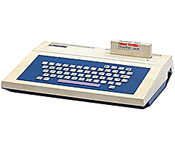
A copy of an American computer system, this was originally released only in Japan, later to be released back into America.
Franklin ACE 2100
$1,000 - 1985
$1,000 - 1985
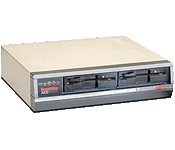
Franklin used to make illegal Apple computer clones, but after they got busted, they turned legit.
Like most clones, the Franklins were cheaper and had more features.
Exidy Sorcerer
$1,400 - 1978
$1,400 - 1978
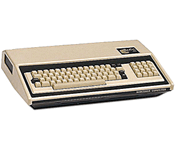
This system has no built-
All programs are loaded from a cassette tape, or a cartridge plugged into the right side of the console.
MOS KIM-1
$245 - 1976
$245 - 1976
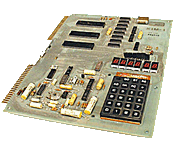
MOS made the very popular 6502 CPU computer chip, then they made this system so people could learn how to use it.
Commodore 128D
$500 - 1985
$500 - 1985
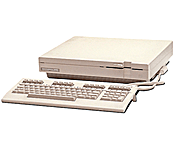
This is Commodore's last and best 8-bit computer - it has two different CPU processors, and could run three different operating systems.
Atari Portfolio
$400 - 1989
$400 - 1989
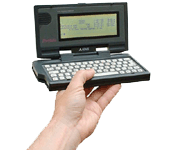
The world's first palmtop PC clone stored data on battery-
Apple IIGS
$1,500 - 1986
$1,500 - 1986
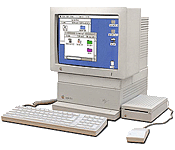
The popular IIGS had the best color graphics and sound of any Apple, and was the first Apple with a color GUI windows-
Radio Shack Color Computer
$400 - 1980
$400 - 1980
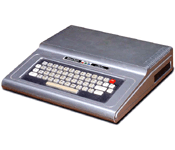
The 'CoCo' is Radio Shack's first color computer, but it can only display four colors. The mediocre keyboard leaves much to be desired.
Additional 'Color Computer' models were released over the following years, each an improvment over the previous.
Commodore PET 2001
$800 - 1977
$800 - 1977
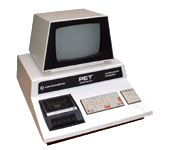
This convenient all
Dynalogic Hyperion
$5,000 - 1983
$5,000 - 1983
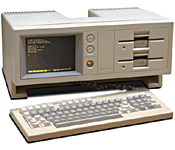
The Hyperion gets no respect, even though it's one of the few computer from Canada, and is the first ever portable IBM-
TRS-80 PC-1 Pocket Computer
$230 - 1980
$230 - 1980
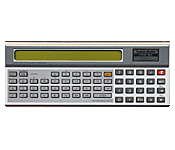
Also sold by Sharp, it's the first-ever BASIC-programmable pocket-sized computer.
TRS-80 PC-2 Pocket Computer
$280 - 1982
$280 - 1982
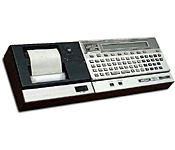
This fast and powerful pocket computer has an exciting four-
Synertek SYM Model 1
$240 - 1978
$240 - 1978
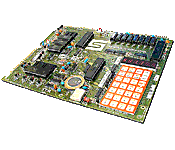
This early, inexpensive SBC (Single Board Computer) from the early days of computing is best used for learning to program, simple machine control, and sensor monitoring.